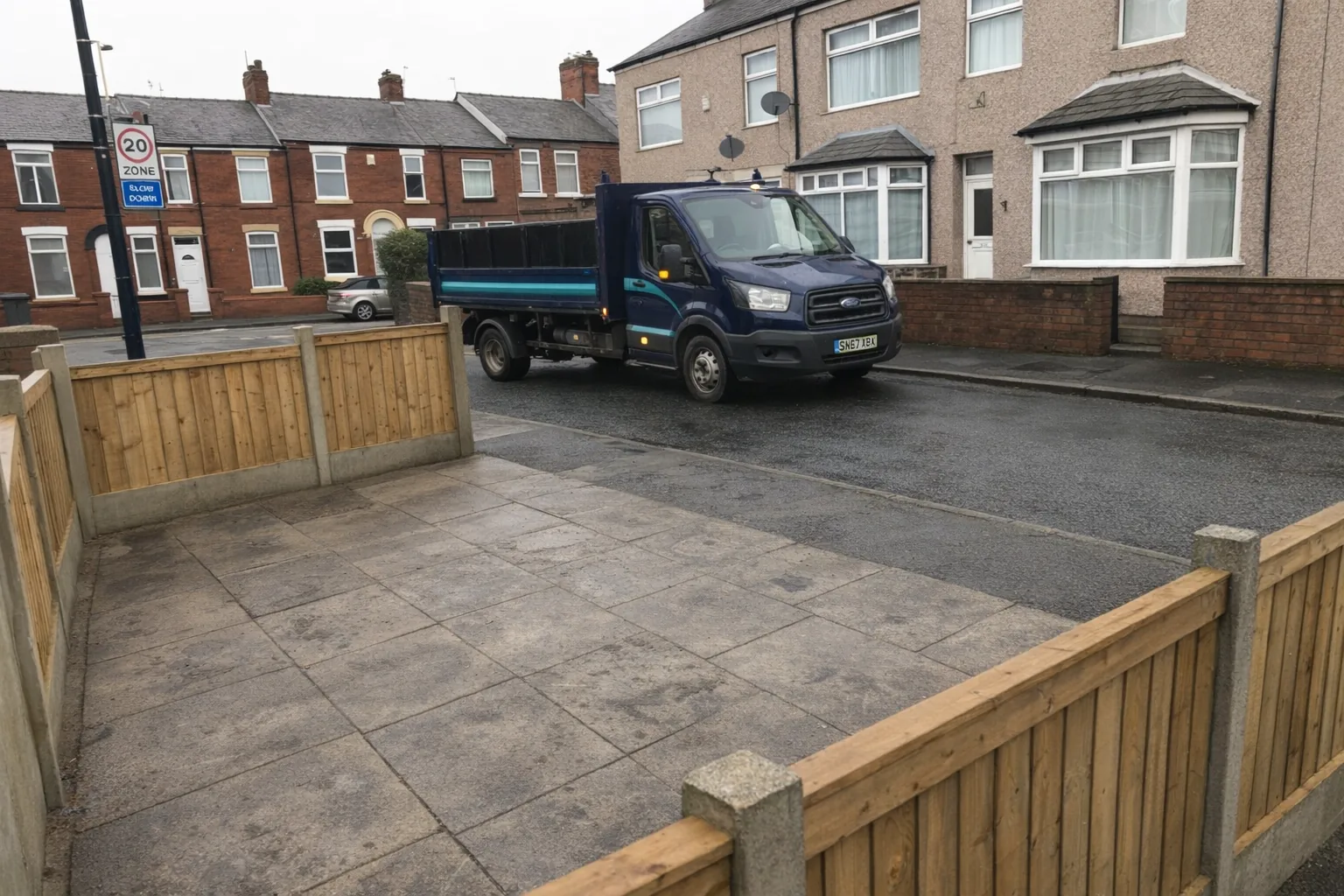
Do I Need a Licensed Waste Carrier? Your Duty of Care Explained
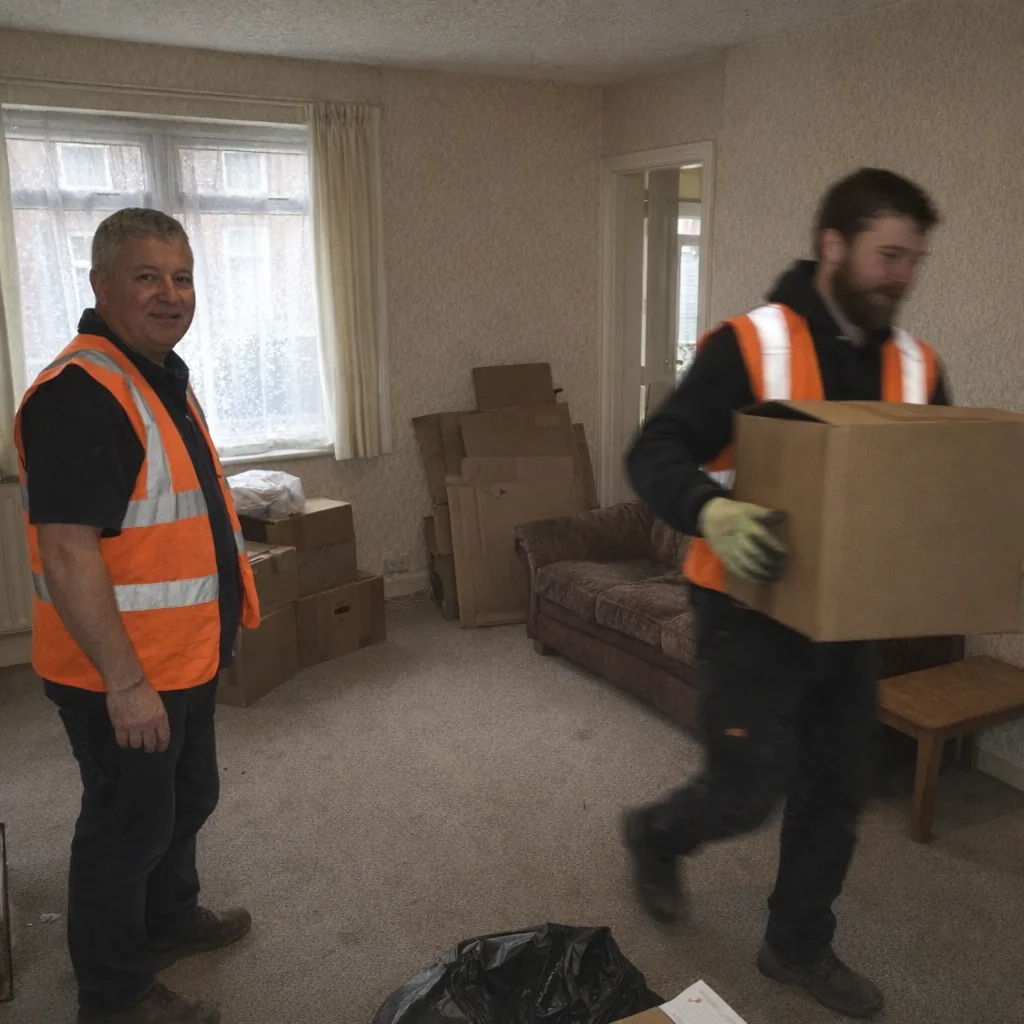
You don't need a licence to get rid of your own household rubbish — but you do have a legal householder duty of care to make sure whoever takes it away is a registered waste carrier with the Environment Agency. Skip that check and hand your waste to a cheap "man with a van" who fly-tips it, and the rubbish can be traced straight back to you. People have been fined £1,000 or more for exactly that — including in the Blackpool area. The good news: checking takes two minutes and protects you completely.
Key takeaways
- You don't need a licence yourself — but you must use a registered carrier.
- Your householder duty of care is the law, not a guideline.
- Get it wrong and the fine can be £1,000+, even if someone else dumped it.
- Check the free Environment Agency register and keep a Waste Transfer Note.
What is the householder duty of care?
Under UK waste law, everyone who produces household waste has a "duty of care" — a legal responsibility to make sure that waste is dealt with properly. For a homeowner, that boils down to one practical rule: only pass your rubbish to someone authorised to take it. In practice, that means a business registered as a waste carrier with the Environment Agency.
It feels unfair the first time you hear it, but the responsibility doesn't stop at your front gate. If you pay someone £40 cash to "make it disappear" and they tip it down a country lane or a back alley, the law treats you as having failed your duty of care. That's a separate offence from the fly-tipping itself — and you can be penalised for it.
Why the cheap quote can cost you £1,000+
Fly-tipped waste almost always carries evidence of where it came from — an envelope, a delivery label, a piece of furniture a neighbour recognises. When investigators trace it back, two people are in the frame: the person who dumped it, and the householder who handed it over without checking. A Blackpool-area resident was fined more than £1,000 for failing to check the collector was a registered carrier after their waste turned up fly-tipped. The "bargain" collection became the most expensive option on the street.
This is also why dumped waste is rarely a victimless problem — and why getting it cleared properly matters. If you've been left with someone else's mess, our fly-tipping clearance service handles it with the right paperwork from the start.
How to check a waste carrier is licensed (in two minutes)
The check is quick, free, and worth doing every time:
- Ask for their registration number. A legitimate carrier will give it without hesitation — it's the same number they should display on their van and website.
- Search the public register. The Environment Agency keeps a free, searchable register of carriers, brokers and dealers at environment.data.gov.uk (the public register of waste carriers). Enter the name or number and confirm the registration is current and matches the business.
- Check the tier. A business that carries other people's waste needs an upper tier registration. (A free lower tier registration only covers carrying your own waste, so it isn't enough for a removal firm.)
If a collector can't or won't give you a number, that's your answer — walk away. Any genuine local operator, including reputable rubbish removal across Blackpool, will be happy to be checked.
What a Waste Transfer Note does for you
A Waste Transfer Note (WTN) is the record of a waste handover — what was taken, when, from where, and by whom. Many carriers now issue these digitally. From your side, it's a receipt that proves you met your duty of care: if anyone ever questions where your waste went, the WTN is your evidence that you handed it to an authorised carrier. Keep it. A remover who offers a WTN as standard is signalling they intend to dispose of your waste lawfully — which is exactly what you want.
Your duty of care follows the waste. The cheapest quote becomes the dearest the moment it's fly-tipped in your name.
Frequently asked questions
Do I personally need a licence to throw away my own rubbish?
No. You don't need a licence to dispose of your own household waste responsibly — but you do have a duty of care to make sure whoever takes it is a registered Environment Agency carrier.
What happens if I use an unlicensed remover?
If your waste is fly-tipped, it can be traced back to you, and failing to check the carrier can mean a fixed penalty or a fine of £1,000 or more — even though someone else dumped it.
How do I check a carrier is licensed?
Ask for their Environment Agency registration number and confirm it on the free public register at environment.data.gov.uk before letting them take anything.
What is a Waste Transfer Note?
It's the record — often digital — of what waste was handed over, when and to whom. Keeping it is your proof that you disposed of your rubbish lawfully.
Want a remover who hands you the paperwork as standard and is happy to be checked on the register? Request a quote and we'll confirm everything up front — no cash-in-hand mystery, no fly-tip landing back on your doorstep.
Sources
- GOV.UK — Rules for householders: dispose of business or household waste / duty of care.
- Environment Agency — Public register of waste carriers, brokers and dealers (environment.data.gov.uk).
- GOV.UK — Register or renew as a waste carrier, broker or dealer (upper vs lower tier).
- Local-authority enforcement reporting — householder duty-of-care fines of £1,000+ for using unregistered carriers.
Keep reading
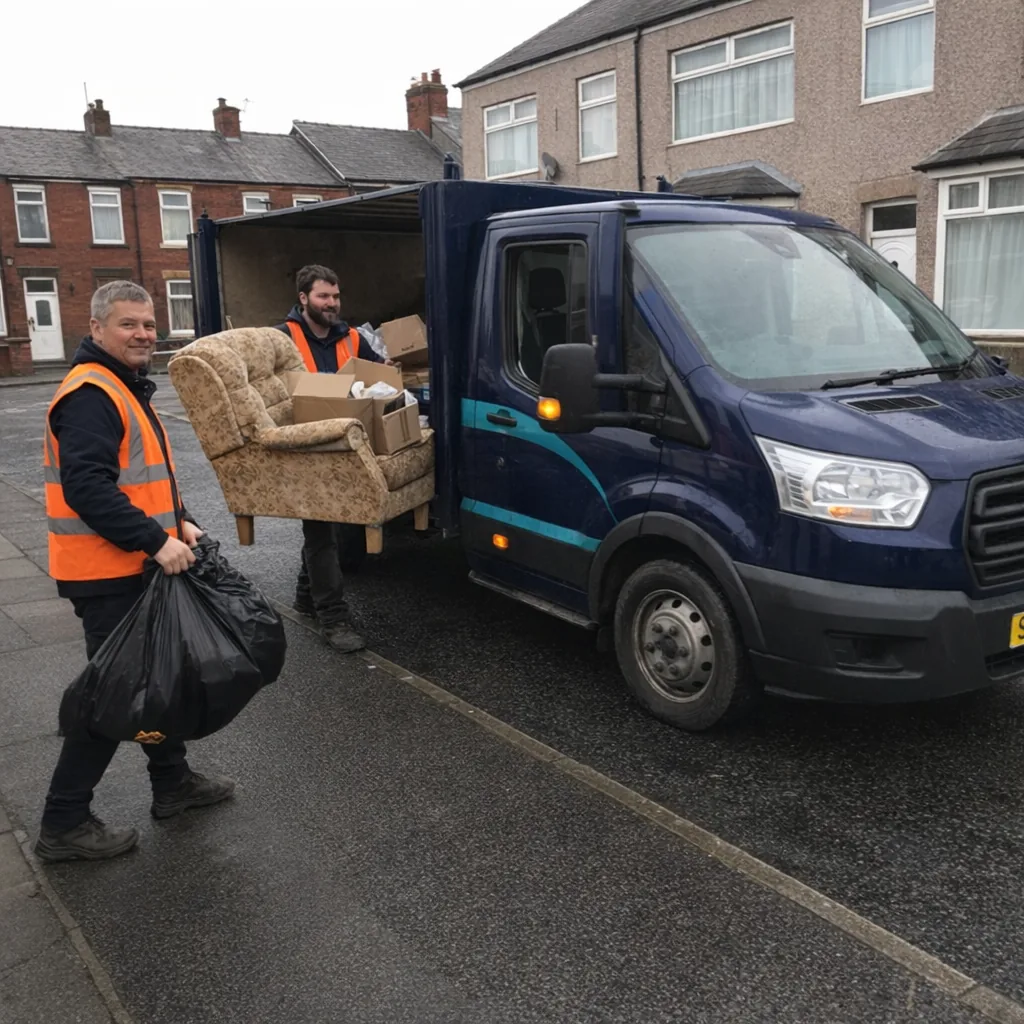
How Much Does Rubbish Removal Cost in Blackpool? (2026 Prices)
What rubbish removal really costs in Blackpool in 2026 — single items from ~£60, man-and-van loads from £65 to £495, the ~£75 per cubic yard benchmark and house clearance ranges, all with sources.
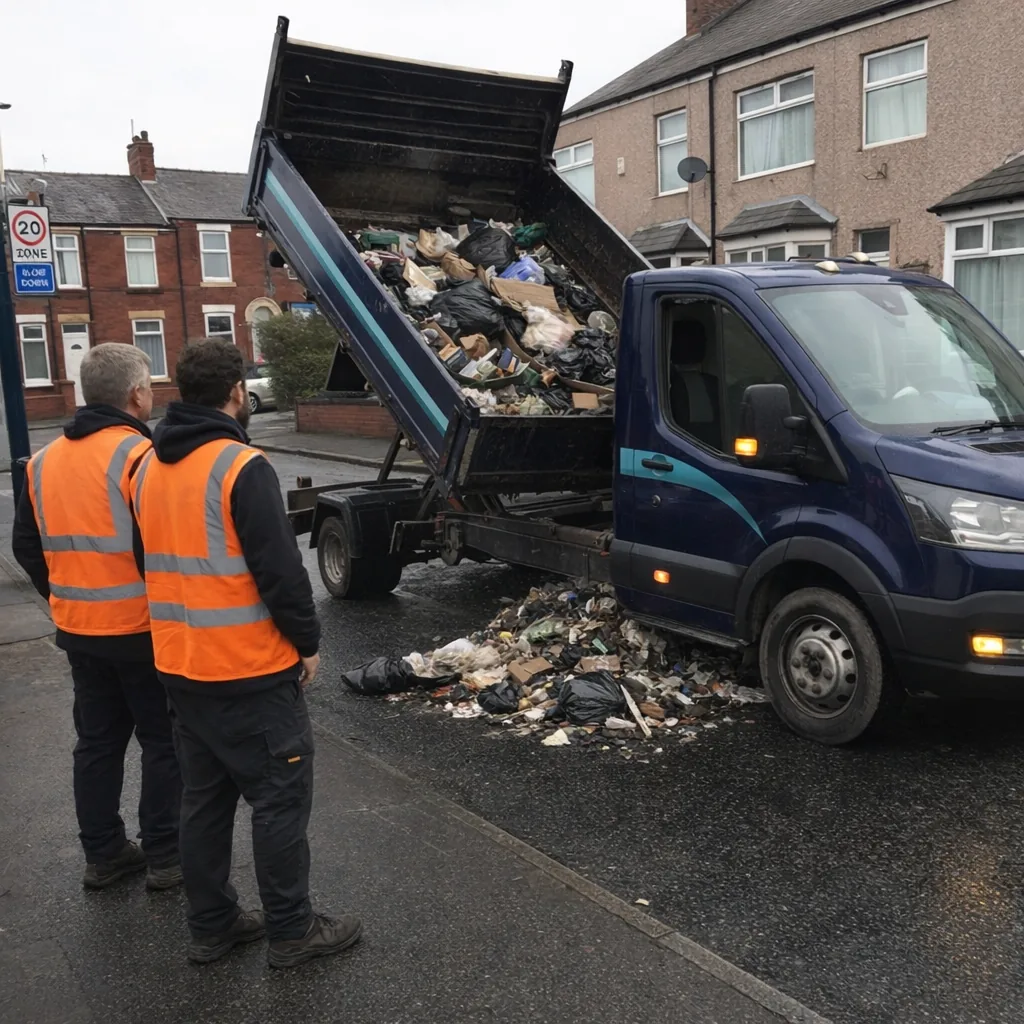
Rubbish Removal vs Skip Hire in Blackpool: Which Is Cheaper?
Skip or man-and-van? We compare cost, council permits, who does the loading and how fast each option clears your Blackpool waste — and explain when a skip still makes sense.
How to Dispose of a Fridge or Freezer in Blackpool (WEEE Rules)
Fridges and freezers are hazardous WEEE — they must be degassed by a certified handler before recycling. Here's how to dispose of one legally in Blackpool, the fines for getting it wrong, and the tip van-permit catch.